
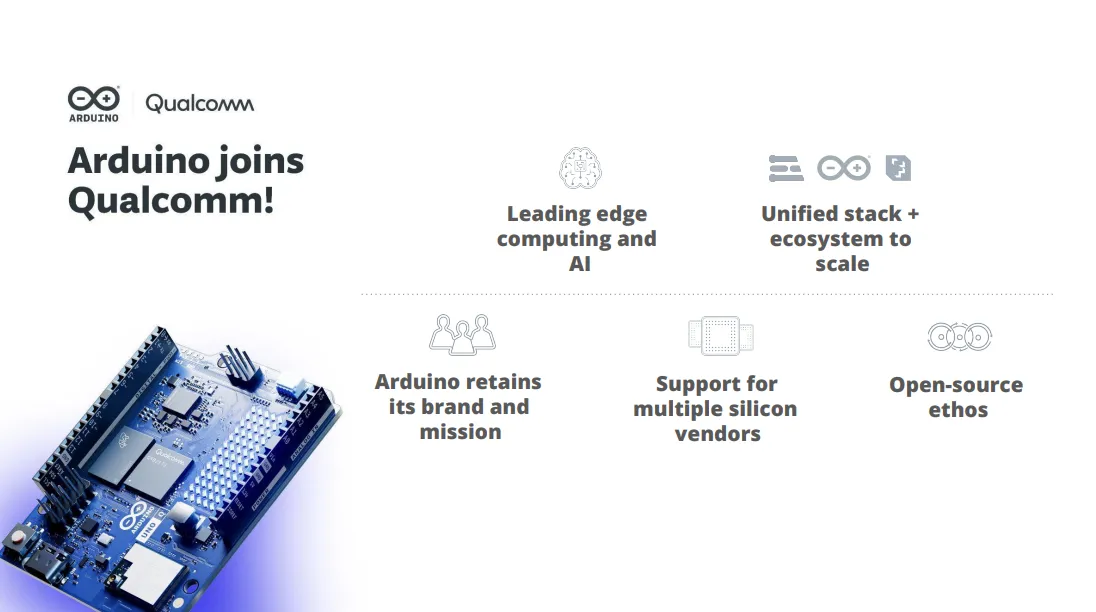
Qualcomm just dropped a surprise that’s getting a lot of buzz: they’re acquiring Arduino. The idea, as Qualcomm puts it, is to accelerate developer access to edge computing and AI across IoT, robotics, smart cities, and more.
Why This Move Makes Sense
Arduino is one of those names everybody recognizes in maker and embedded communities — simple boards, friendly tools, tons of community support. Qualcomm, on the other hand, brings serious muscle in mobile, SoCs, AI acceleration, and connectivity tech. Pairing the two brings the possibility of a bridge: maker-level ease + enterprise-grade edge AI.
For Qualcomm, this helps them expand beyond phones and into more embedded, industrial, and consumer-device AI use cases. For Arduino, it means more resources, likely more robust hardware, and better access to edge AI and connectivity tech that makers have long dreamed of.
What It Could Deliver (If Done Right)
If Qualcomm plays this smart, we might see a few key benefits:
- Arduino boards with onboard AI acceleration or neural processing units (NPUs) for doing real inference on-device.
- Better integration of Qualcomm’s connectivity tech (5G, Wi-Fi, Bluetooth) with Arduino form factors and tools.
- More robust software, SDKs, and edge computing frameworks tailored for makers, developers, and even educators.
- Easier scaling from prototyping to production — Arduino-based projects could potentially jump to Qualcomm’s manufacturing and connectivity ecosystem.
Risks & Challenges to Watch
Of course, acquisitions are never seamless. Some potential pitfalls:
- Maintaining the open, community spirit of Arduino — many users choose Arduino for its accessibility and openness. Qualcomm must avoid turning it into a sealed, proprietary ecosystem.
- Hardware direction conflicts — Arduino’s boards are generally simple, low-cost designs; Qualcomm’s edge ambitions might push for higher cost, more complex modules.
- Software integration and support — merging Qualcomm’s and Arduino’s stacks could be messy, especially with legacy tools and libraries.
- User sentiment — longtime Arduino fans might worry about losing independence or community-driven innovation.
What This Means for You
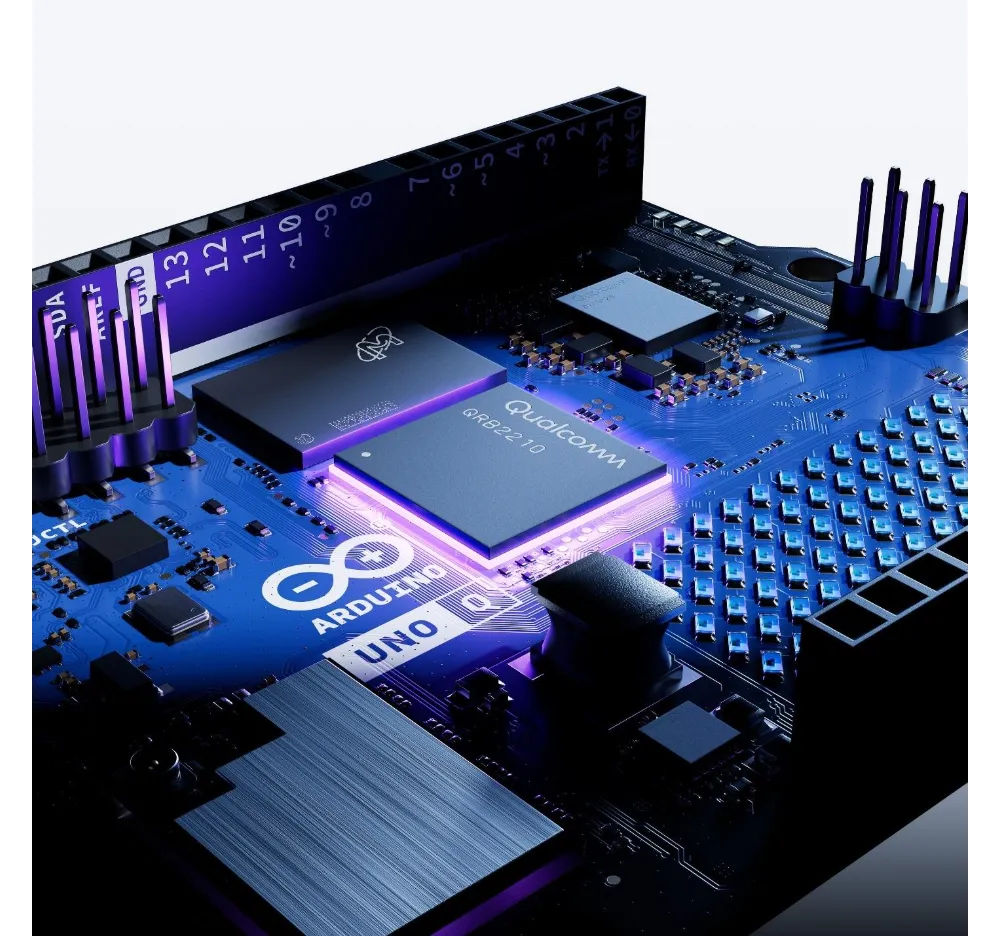
If you’re a maker, student, hobbyist, or embedded developer, this acquisition is worth watching. Down the line, you might get Arduino boards with real AI processing on-device, lower latency, and seamless connectivity baked in. That means fewer dependencies on cloud inference and more capability at the edge.
In the short term, don’t expect existing Arduino gear and tools to vanish overnight — Qualcomm will likely ease the integration. But for anyone who’s ever wished their Arduino project could do more than “blink an LED,” this is one of those announcements that could shift how embedded AI projects evolve over the next few years.
Source: Qualcomm