First teased at CES 2025, the ROG Crosshair X870E Apex finally makes its way to Malaysia. This is the first Apex board for the AMD platform, and ASUS has clearly put a lot of thought into making it the go-to choice for overclockers and enthusiasts who want the absolute best for Ryzen 9000 series processors.
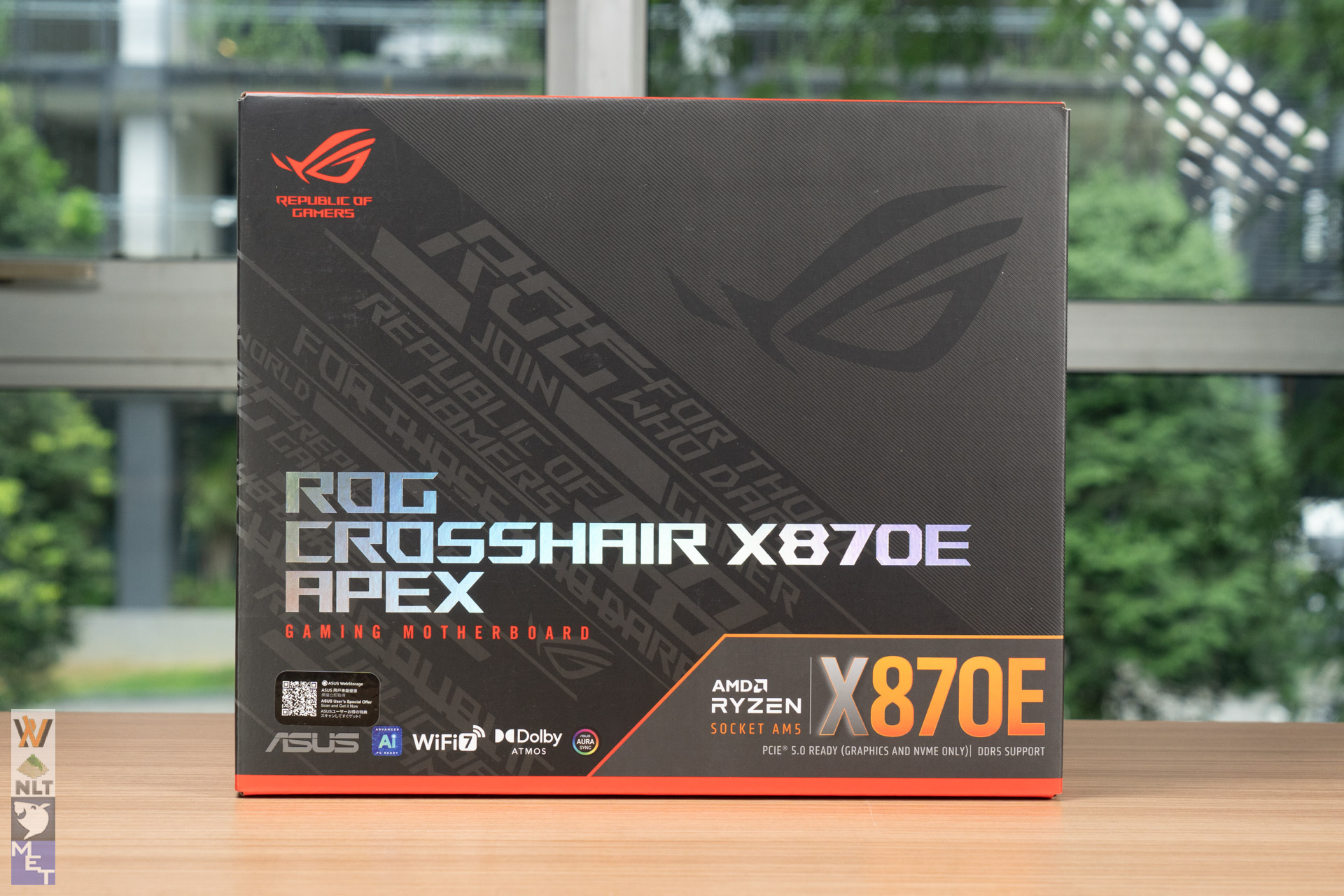
I’ve been eager to see how the X870E Apex performs in memory overclocking, especially when paired with the Ryzen 9 9950X. After spending some time with it, I can confidently say that the X870E Apex is definitely one of the best AMD overclocking boards around now.
Design and Features
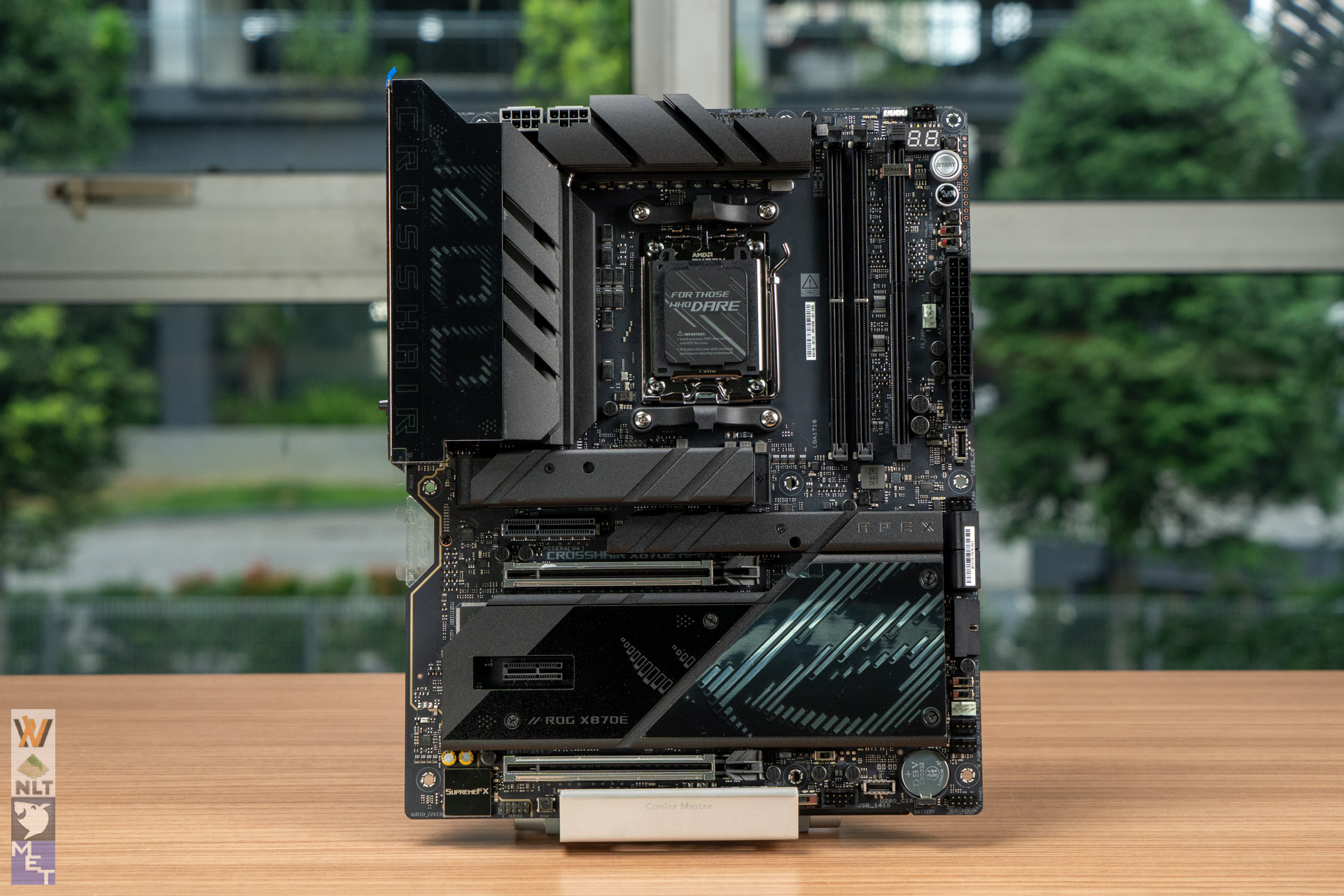
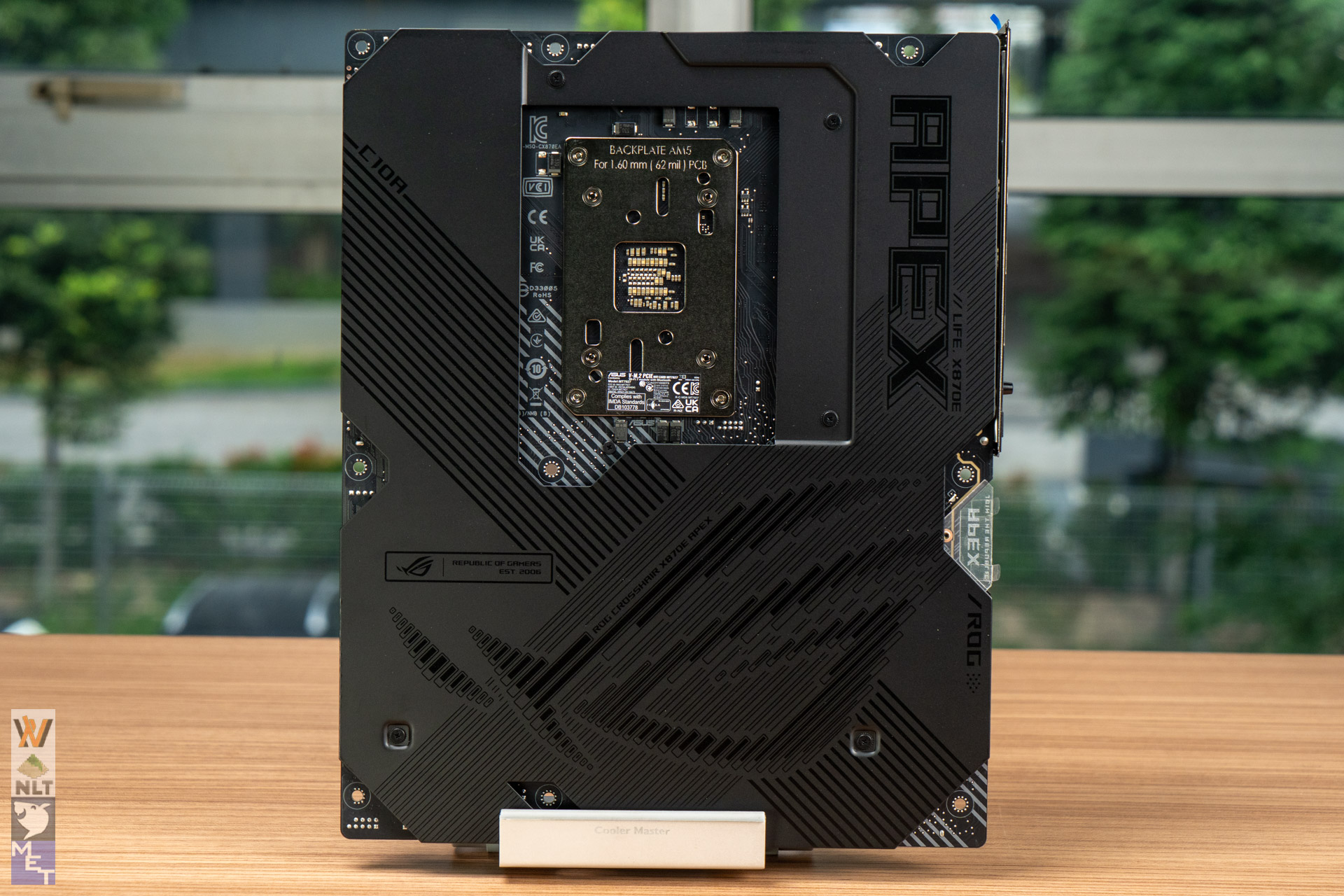
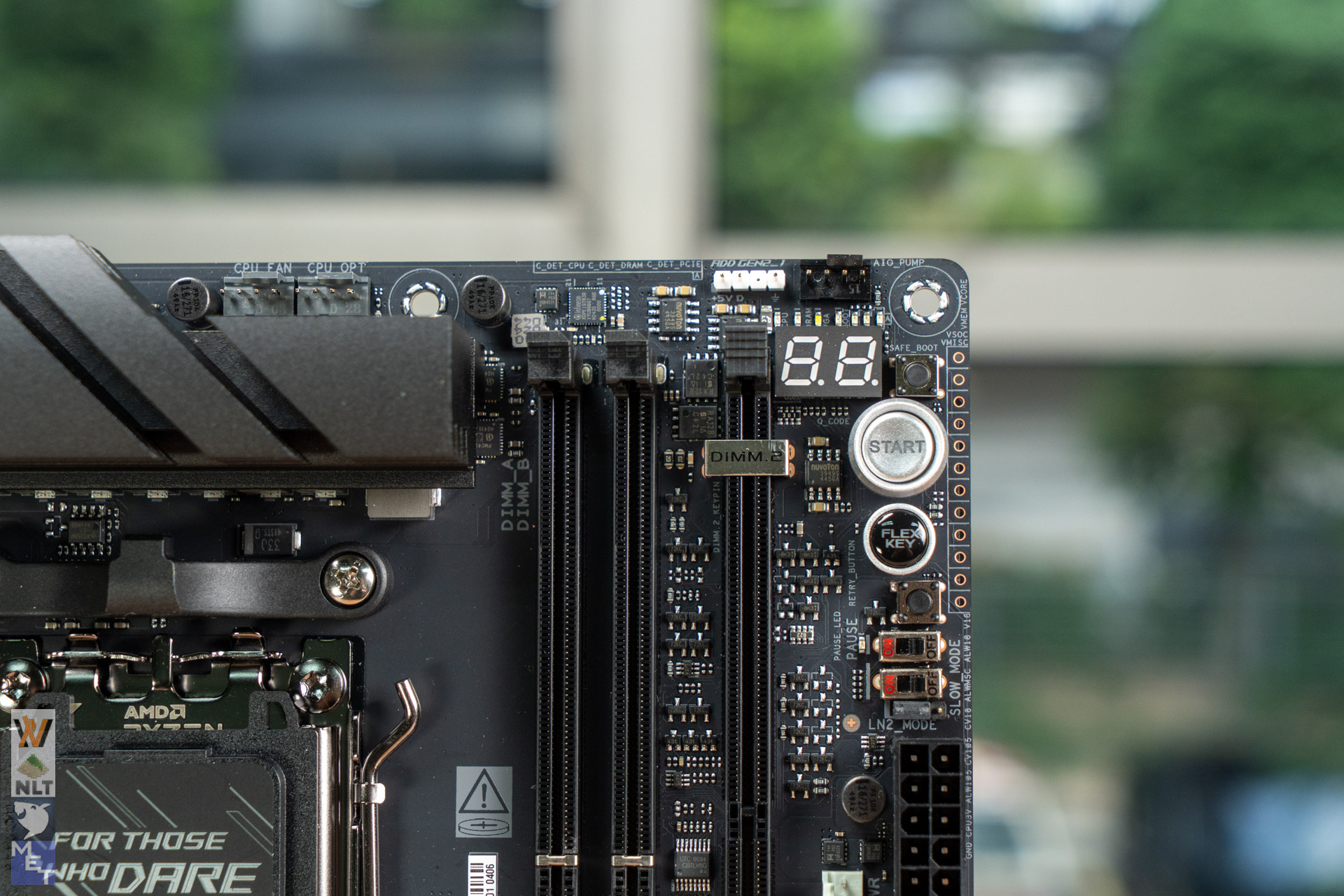
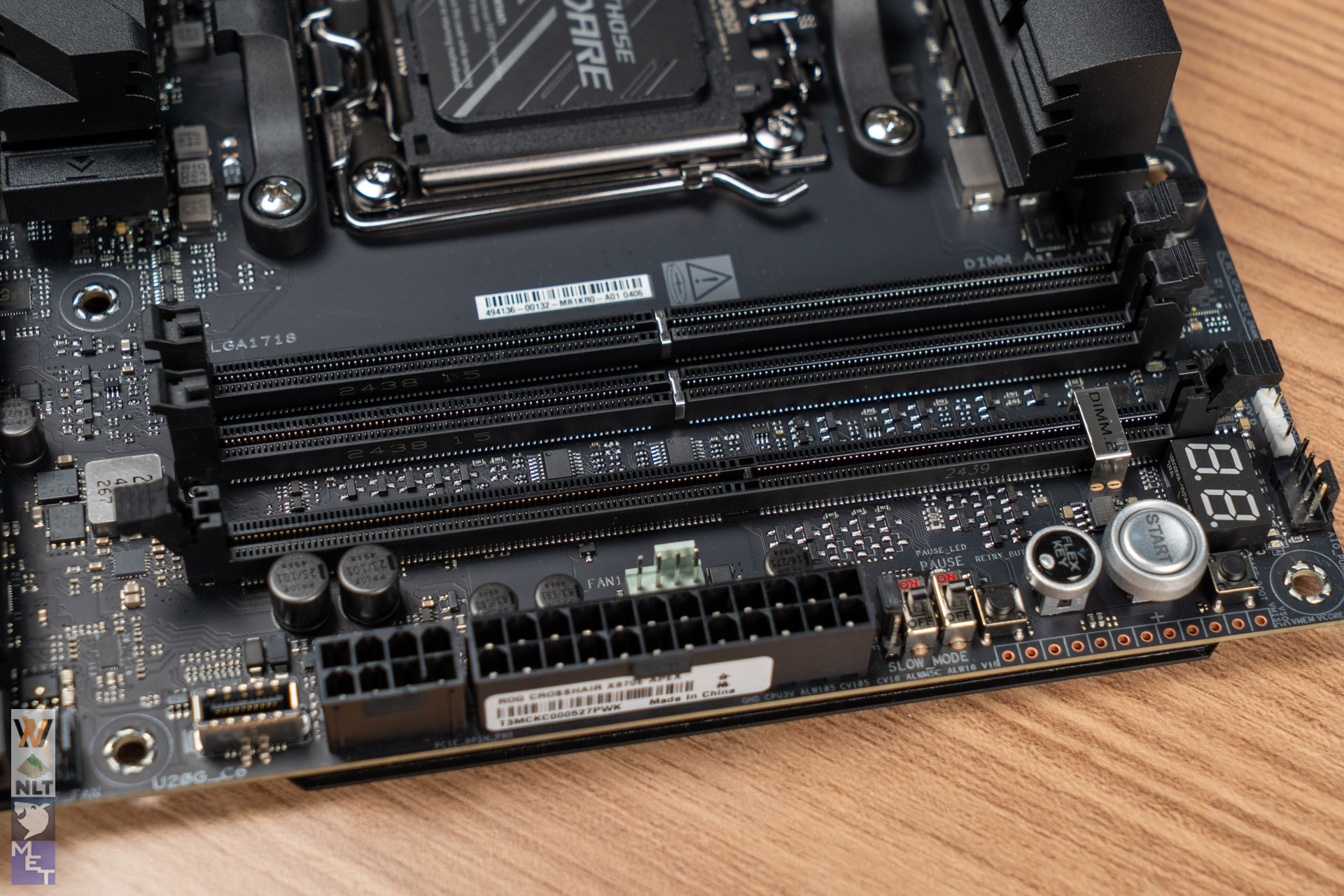
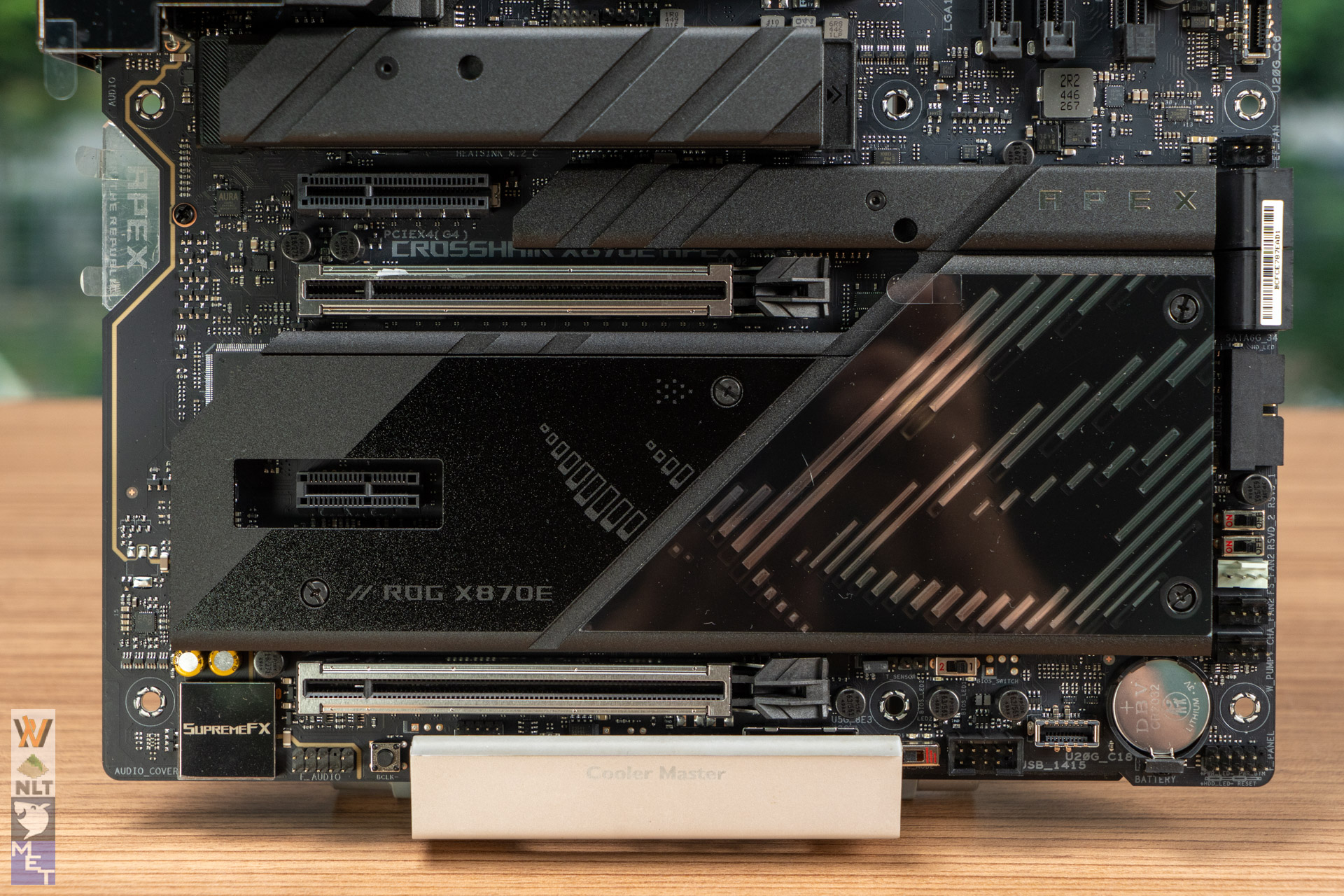
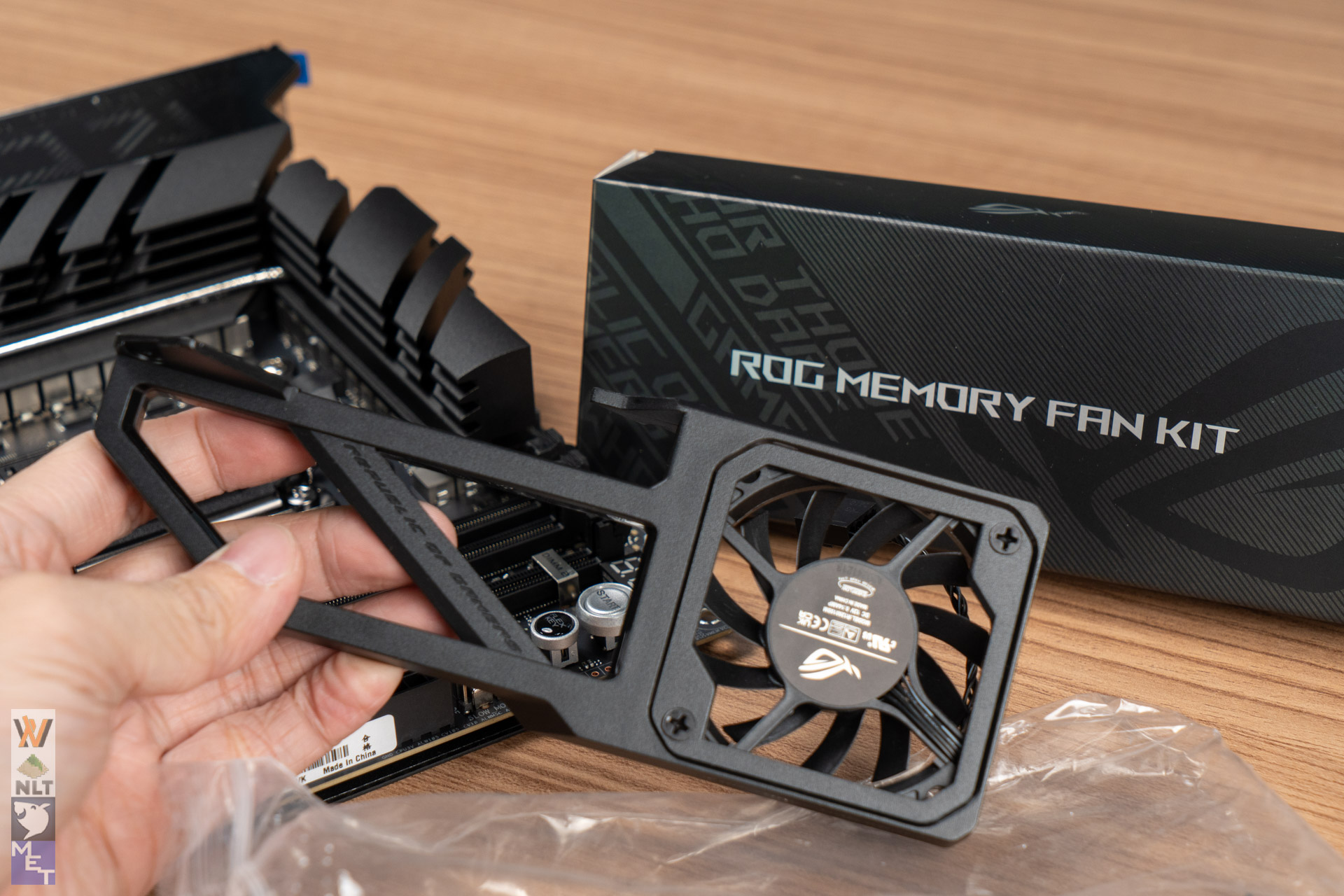
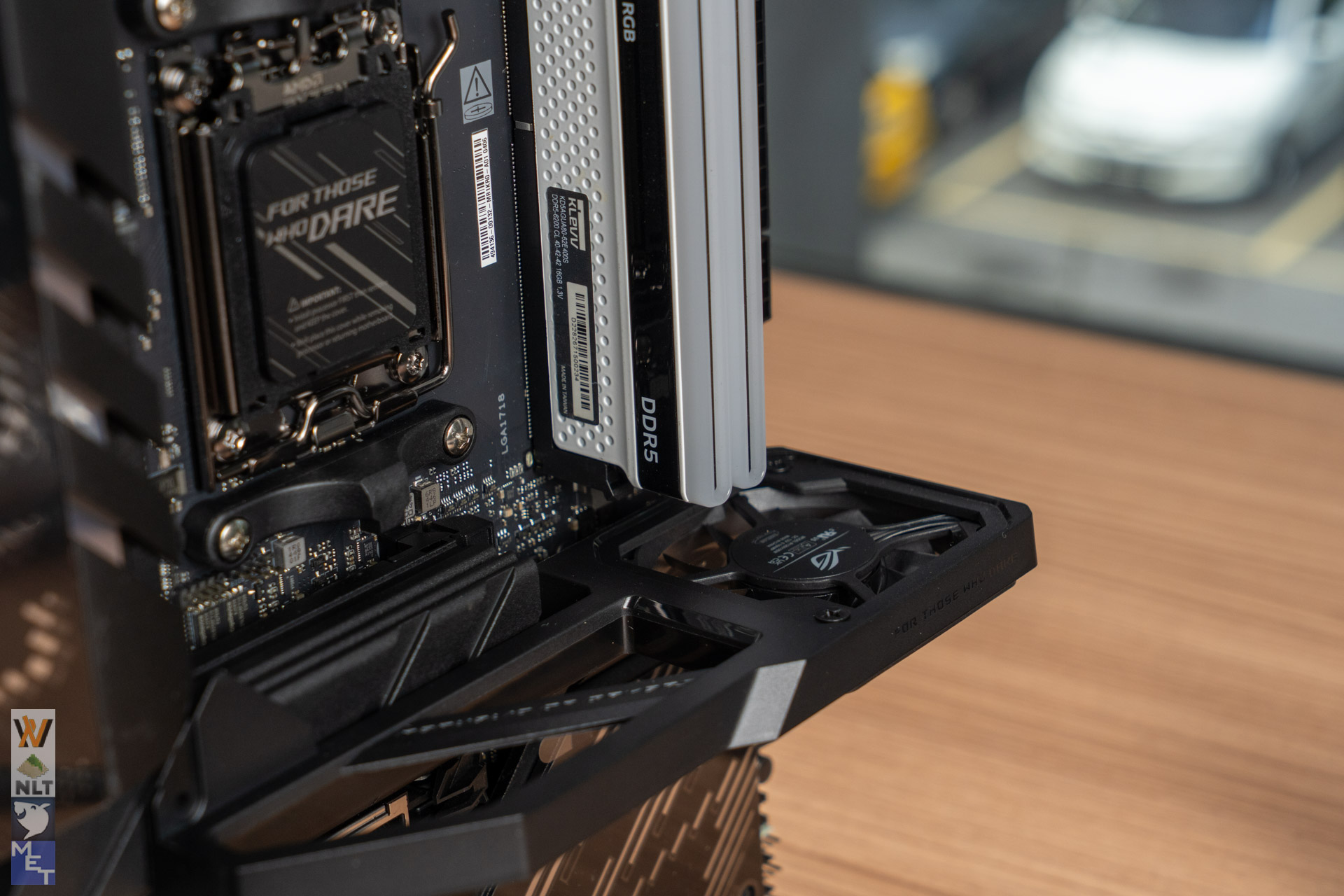
The Apex is unmistakably part of the ROG family, with a bold design that emphasizes functionality while still looking sleek. Unlike the HERO, the Apex is a two-DIMM design, which is what makes it so powerful for memory overclocking.
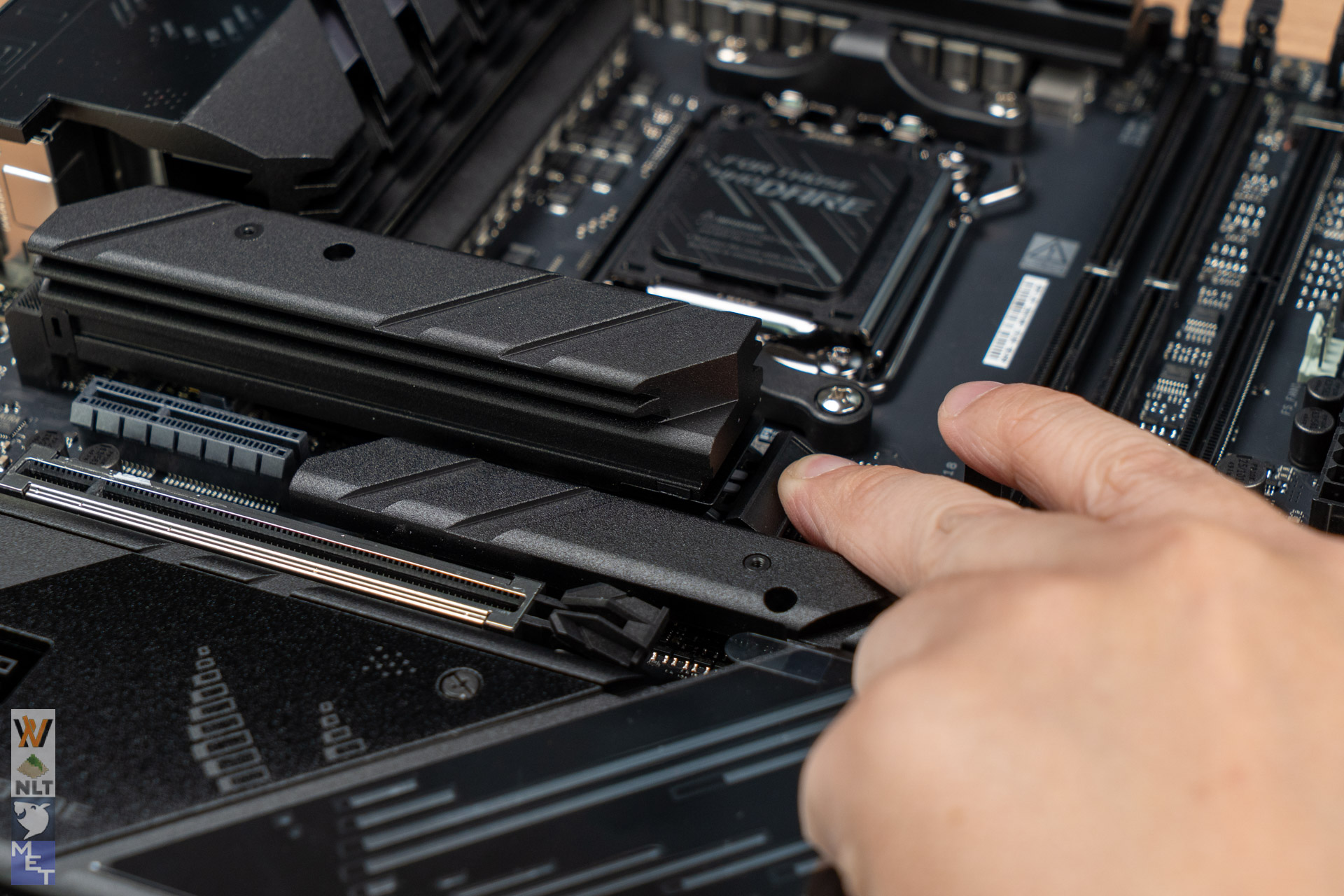
You also get the usual Apex perks like onboard power and reset buttons, LN2 mode, Q-Code display, and ASUS’ EZ PC DIY features such as the Q-DIMM, M.2 Q-Slide, and Q-Release features that make swapping hardware easier. It is a very practical board if you like to tinker, test, and push your system beyond the usual limits.
On the software side, you’ll also get the ASUS AI Intelligence features, such as AI overclocking, cooling II, and networking II that come in handy for those who want to further utilize the other features available on this board.
VRM Design
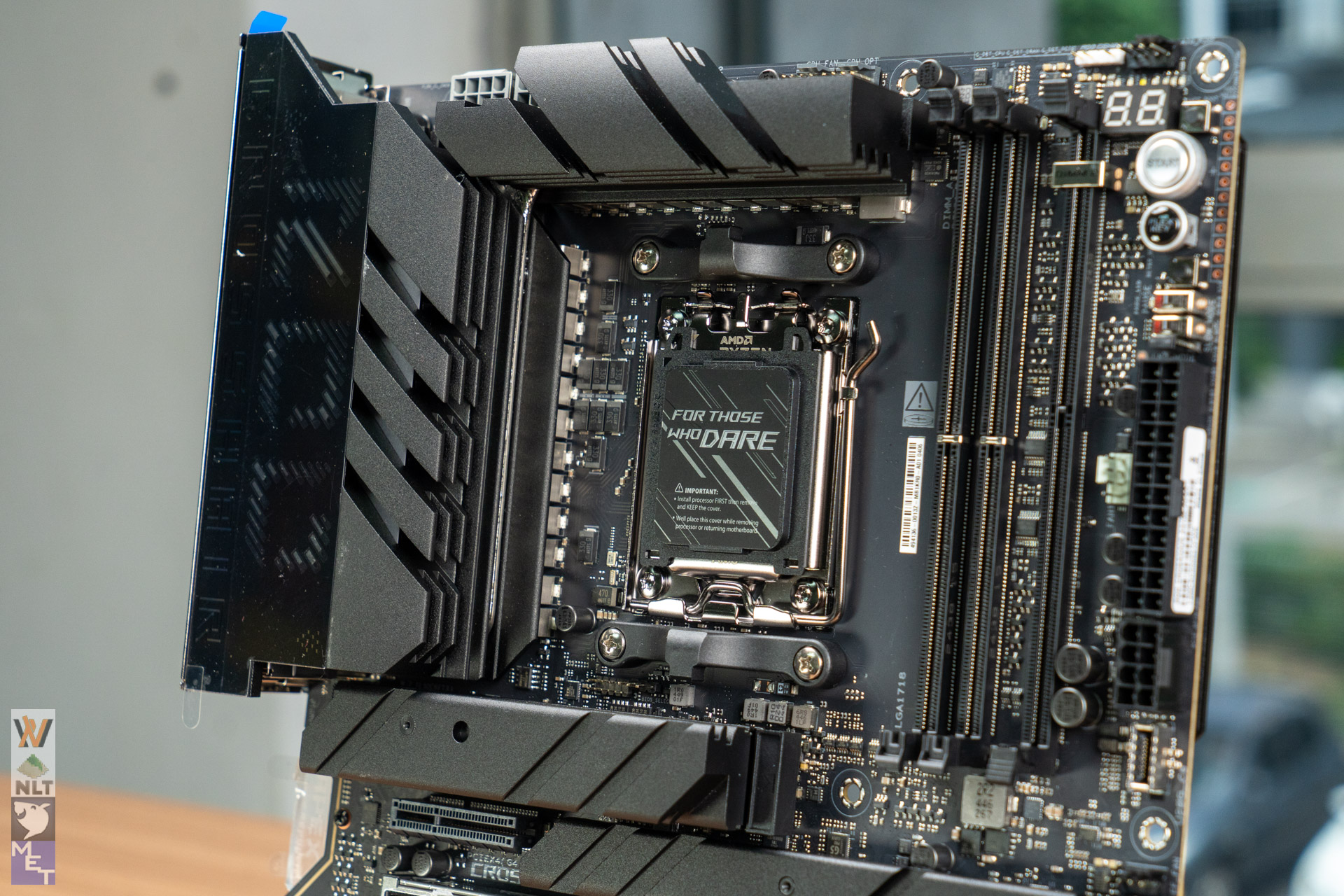
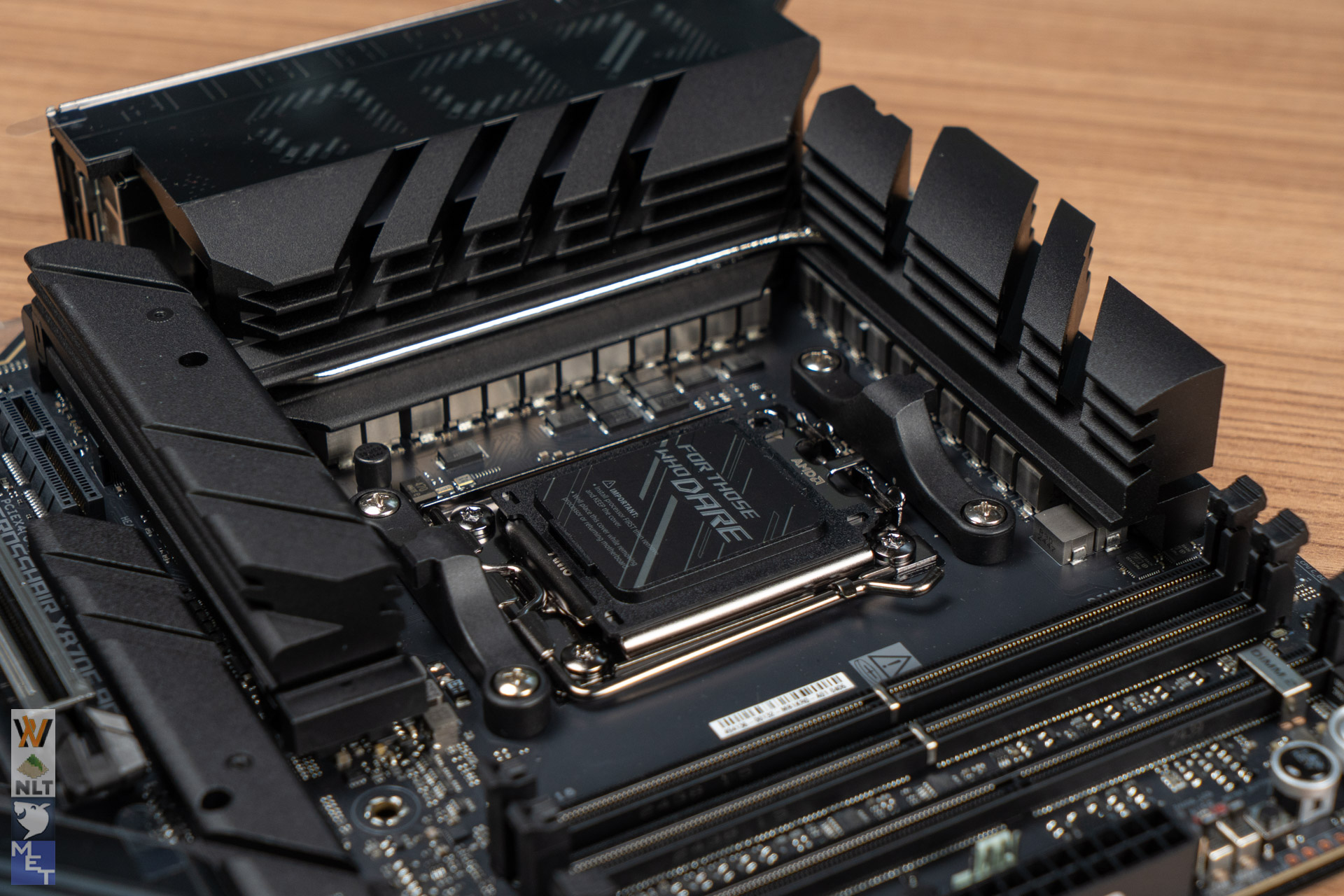
Power delivery is always a big highlight for Apex boards, and the X870E Apex is no exception. It 18+2+2 power phase design, cooled by two large heatsinks connected with a heatpipe. The fins include a section of diffusing material that reflects RGB lighting from below, but the overall heatsink size is smaller than what we typically see on higher-end boards. There is also no active cooling, which makes sense since this board is geared toward extreme overclockers who would likely remove the heatsinks for sub-zero cooling anyway.
The VRM setup itself consists of 20 power stages in a teamed configuration using Vishay SiC850A components rated at 110A. These handle the vCore (18 stages) and SOC (2 stages), while two additional 80A Vishay SiC629 stages are used for miscellaneous power delivery. Power management is handled by an ASP2205 DIGI+ controller paired with a Richtek RT3672.
Storage and Connectivity
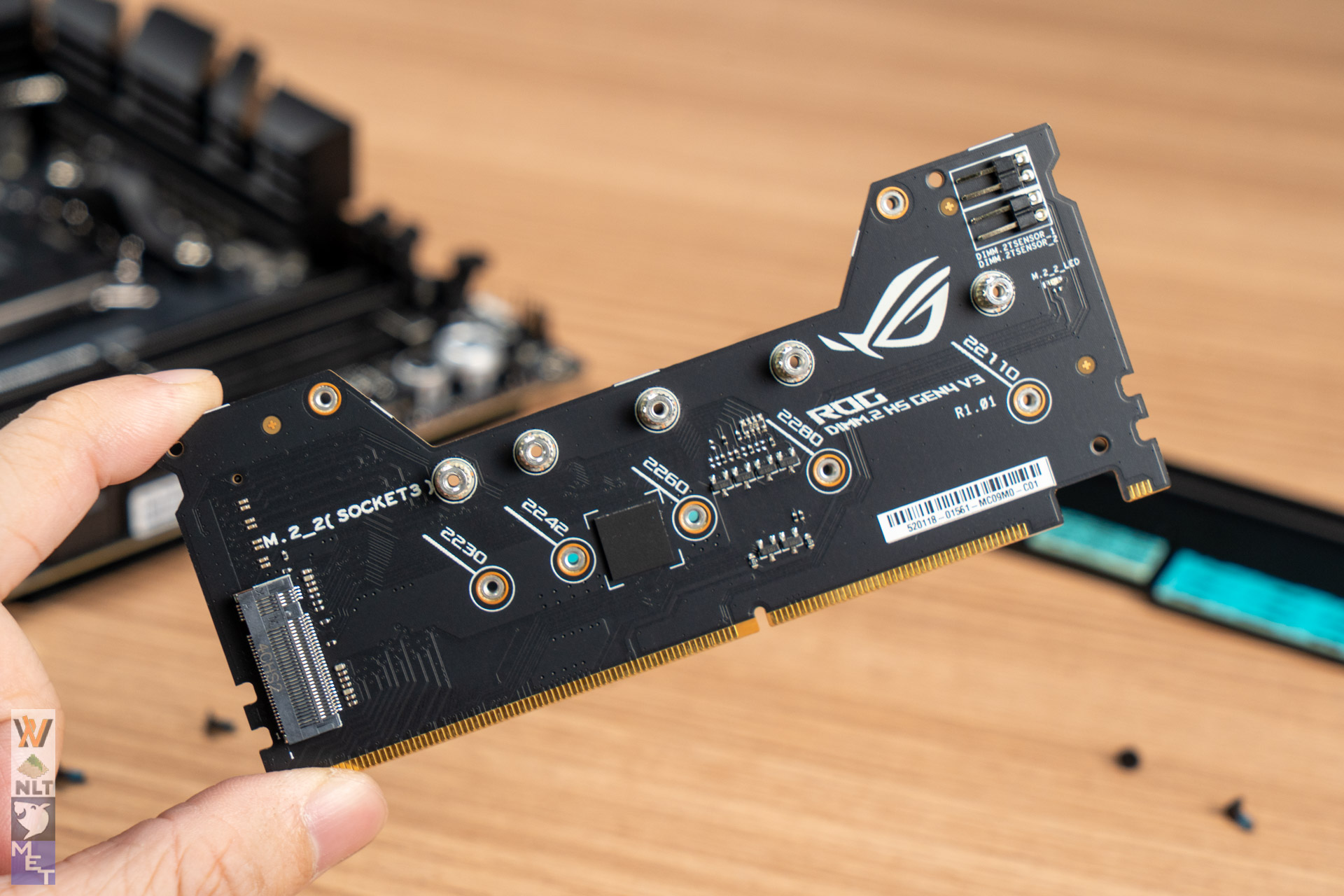
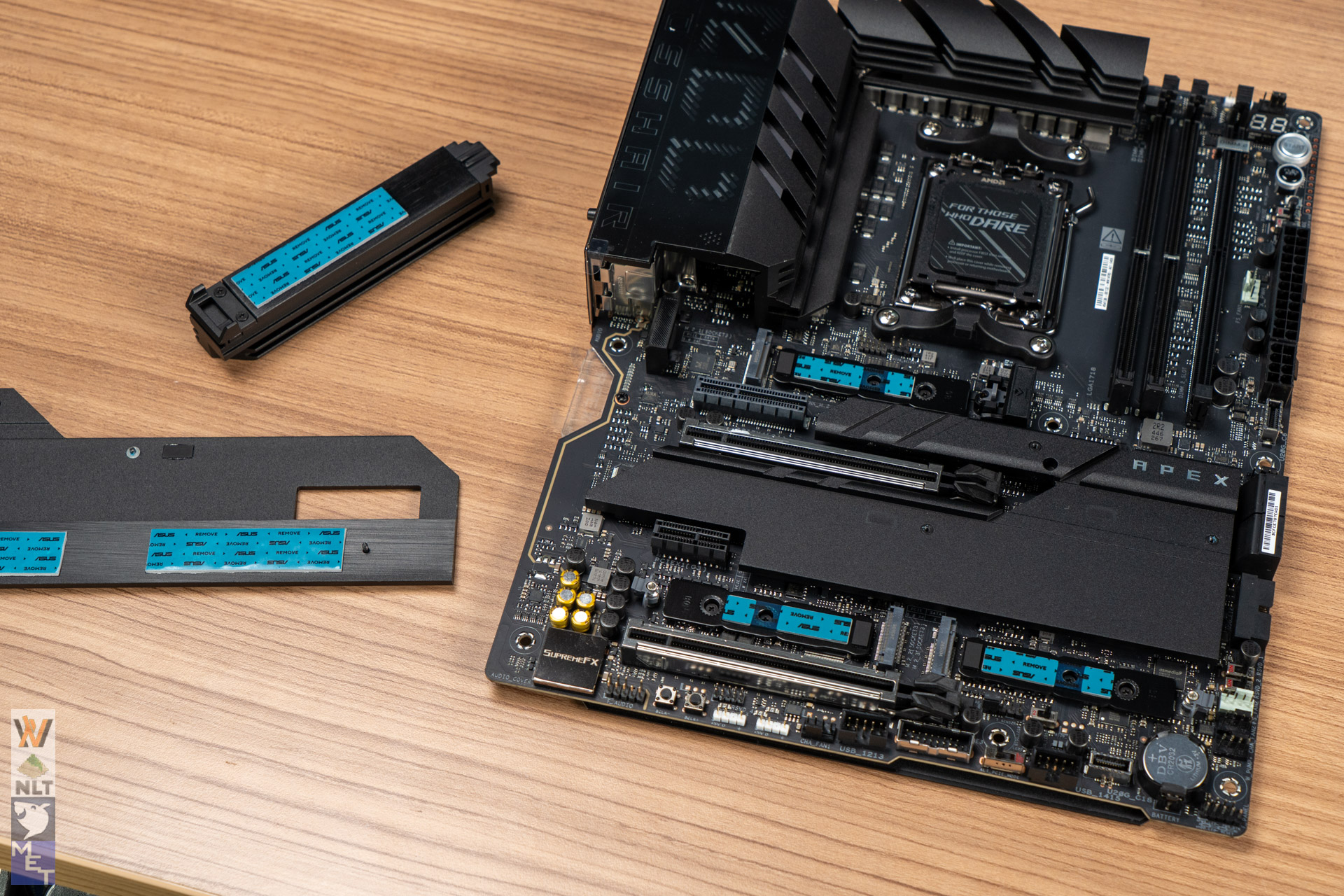
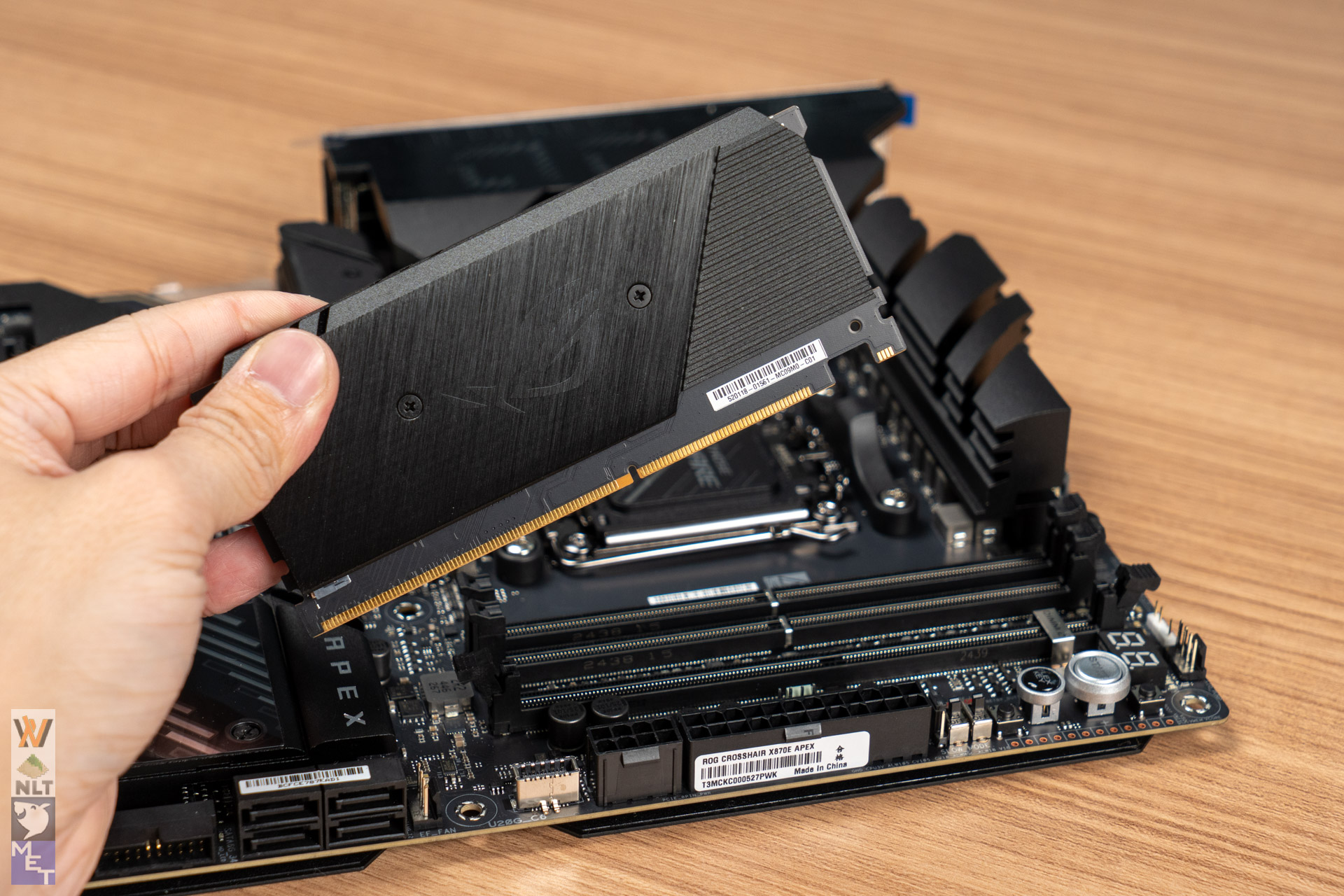
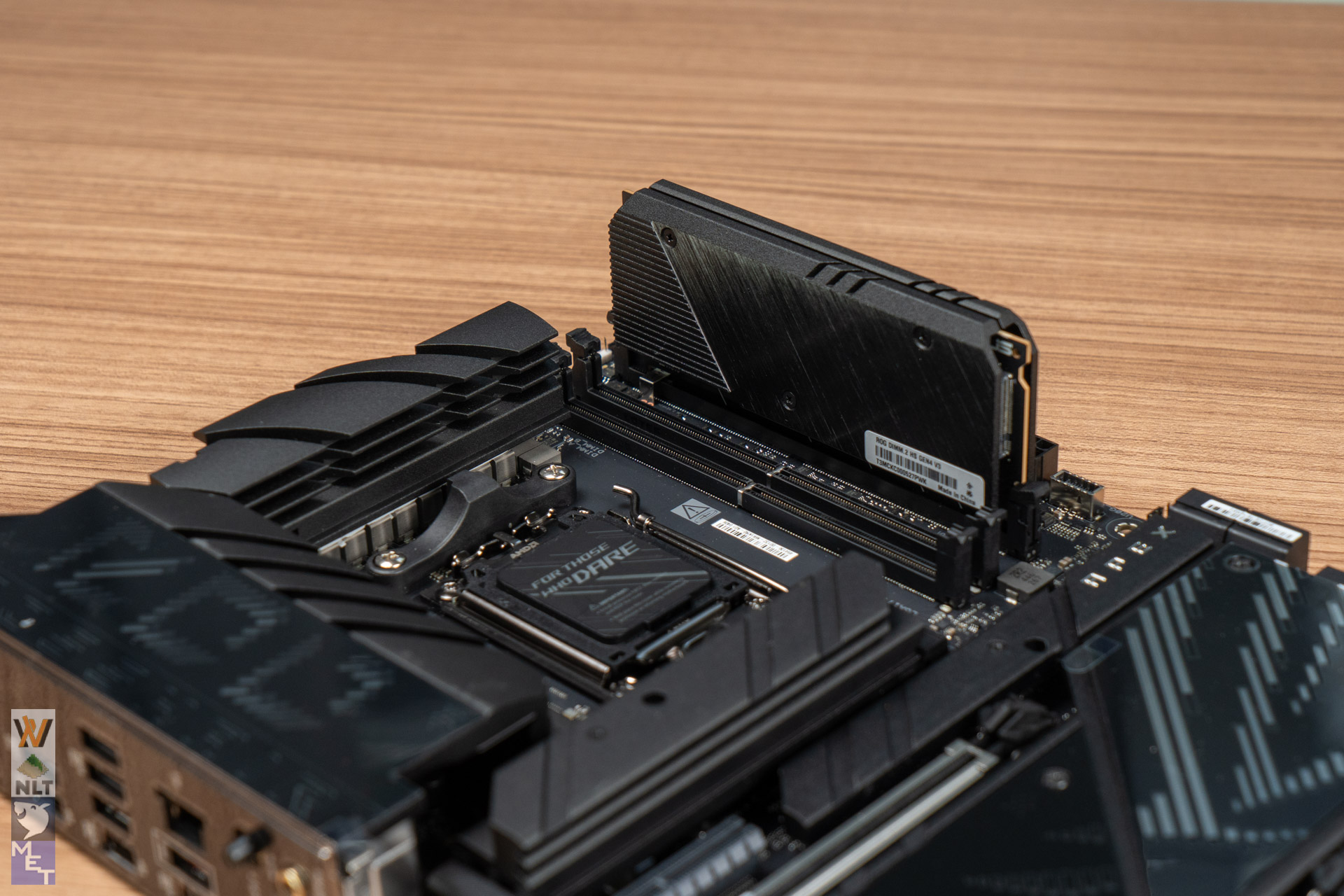
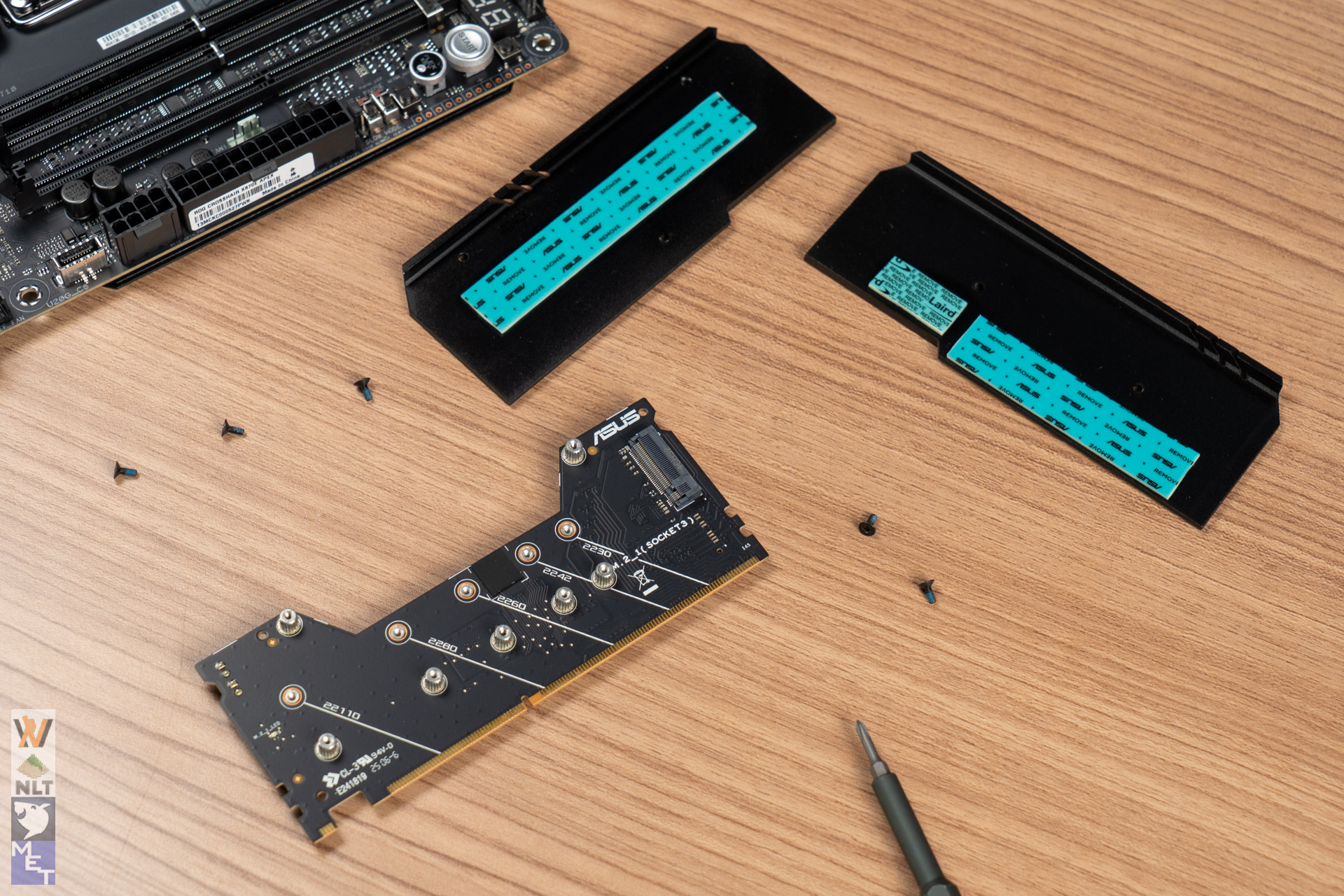
The Apex might be designed for overclocking, but ASUS did not skimp on storage and connectivity either. You get 4 x M.2 slots for high-speed storage, with two of them supporting PCIe 5.0 and the other two supporting PCIe 4.0. This gives you flexibility, whether you want the absolute fastest drives available or a balanced mix of performance and capacity.
The main PCIe slot runs at PCIe 5.0 x16, perfect for pairing with the latest high-end graphics cards. A secondary PCIe 4.0 x4 slot is also available if you need additional expansion options.
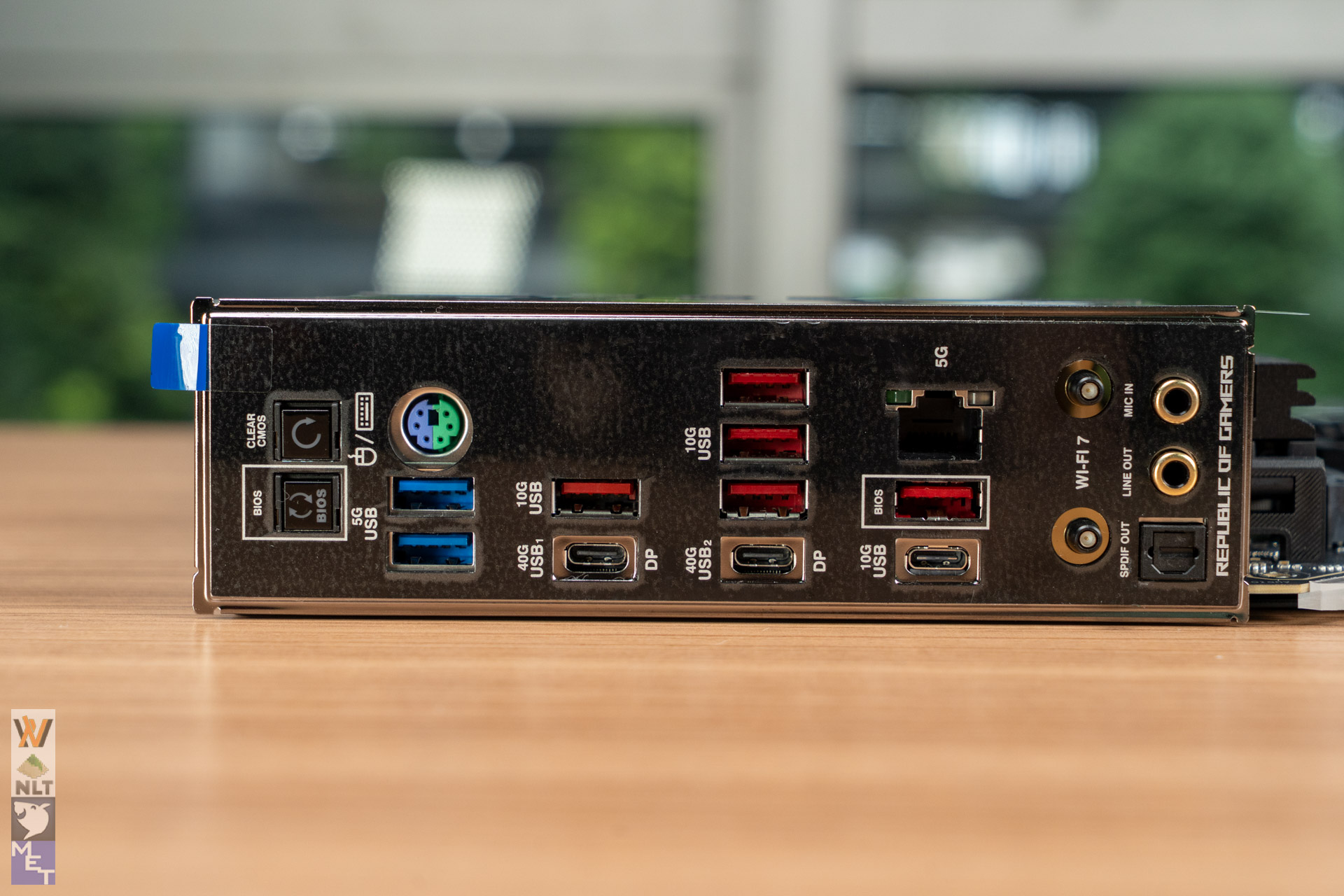
On the rear I/O, ASUS went all out. You’ll find dual USB4 40Gbps Type-C ports, five 10Gbps USB Type-A ports, one 10Gbps USB Type-C port, two 5Gbps USB ports, and even a legacy PS/2 port for peripherals. For display output, there is an HDMI port. Networking is well covered with a 5Gb Ethernet port and the latest Wi-Fi 7 module for fast wireless connectivity. Audio is handled through two audio jacks, and BIOS updates are made easy with the dedicated BIOS FlashBack button.
Thermal Results with AMD Ryzen 9 9950X
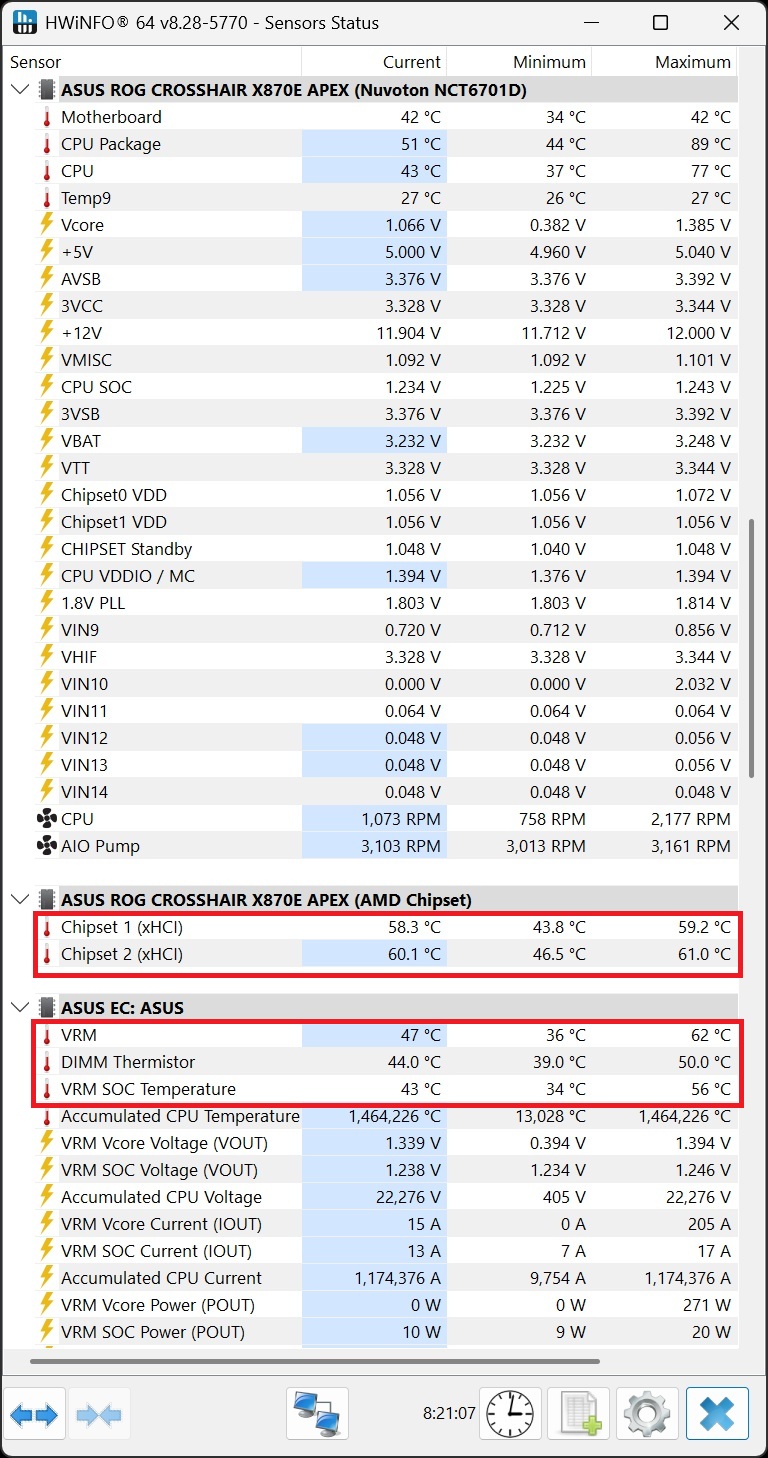
On heavy CPU workloads, the VRM temperature peaked at 62°C according to HWInfo64. The chipset maintained a steady temperature of about 59-61°C throughout testing, showing that ASUS has done a solid job with heatsink design and airflow.
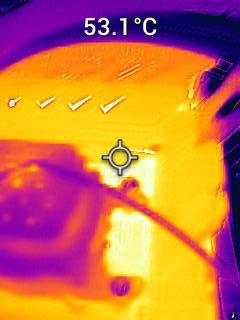
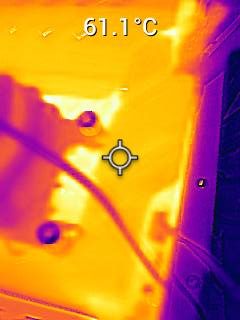
To cross-check, I used a thermal imaging camera and saw two VRM heatsink zones registering 61.1°C and 53.1°C. These results show that the cooling solution is efficient and consistent, ensuring stable operation even during overclocking sessions.
Memory Overclocking
This is where the ROG Crosshair X870E Apex truly shines. Even with my existing DDR5-6000 EXPO-rated kit, the results exceeded expectations. On default EXPO settings, everything ran perfectly stable at 6000 MT/s, which is already the sweet spot AMD recommends.
From there, pushing to DDR5-6400 was straightforward. With some manual tuning, I was able to stabilize timings at CL30-38-38-32 with DRAM voltage set at 1.43V. Inspired by Buildzoid’s recommended subtimings, the board made dialing in these tweaks surprisingly easy.
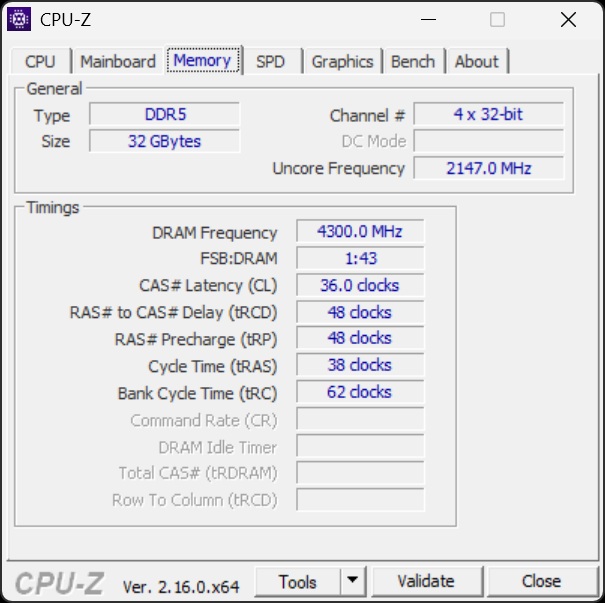
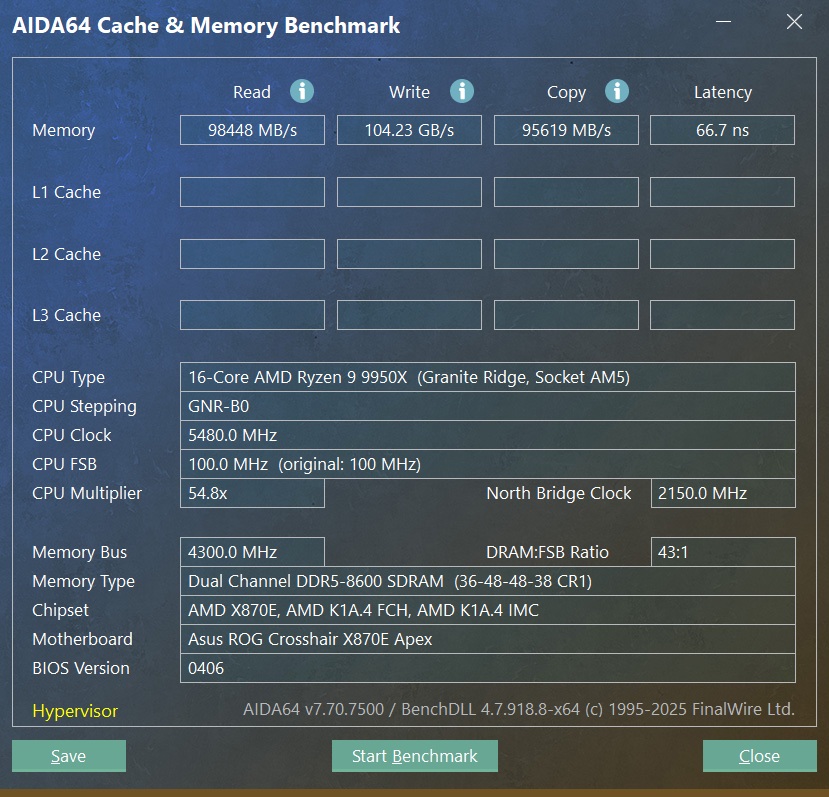
The real surprise came when I pushed the kit all the way to 8600 MT/s at CL36-48-48-38. Compared to the ROG Crosshair X870E HERO, where even 8400 MT/s required a lot of effort, the Apex made 8600 feel almost effortless. This clearly highlights the superior memory topology and BIOS optimization ASUS has built into this board.
If memory overclocking is something you are serious about, the Apex is without a doubt one of the best AMD motherboards you can get right now.
Final Thoughts
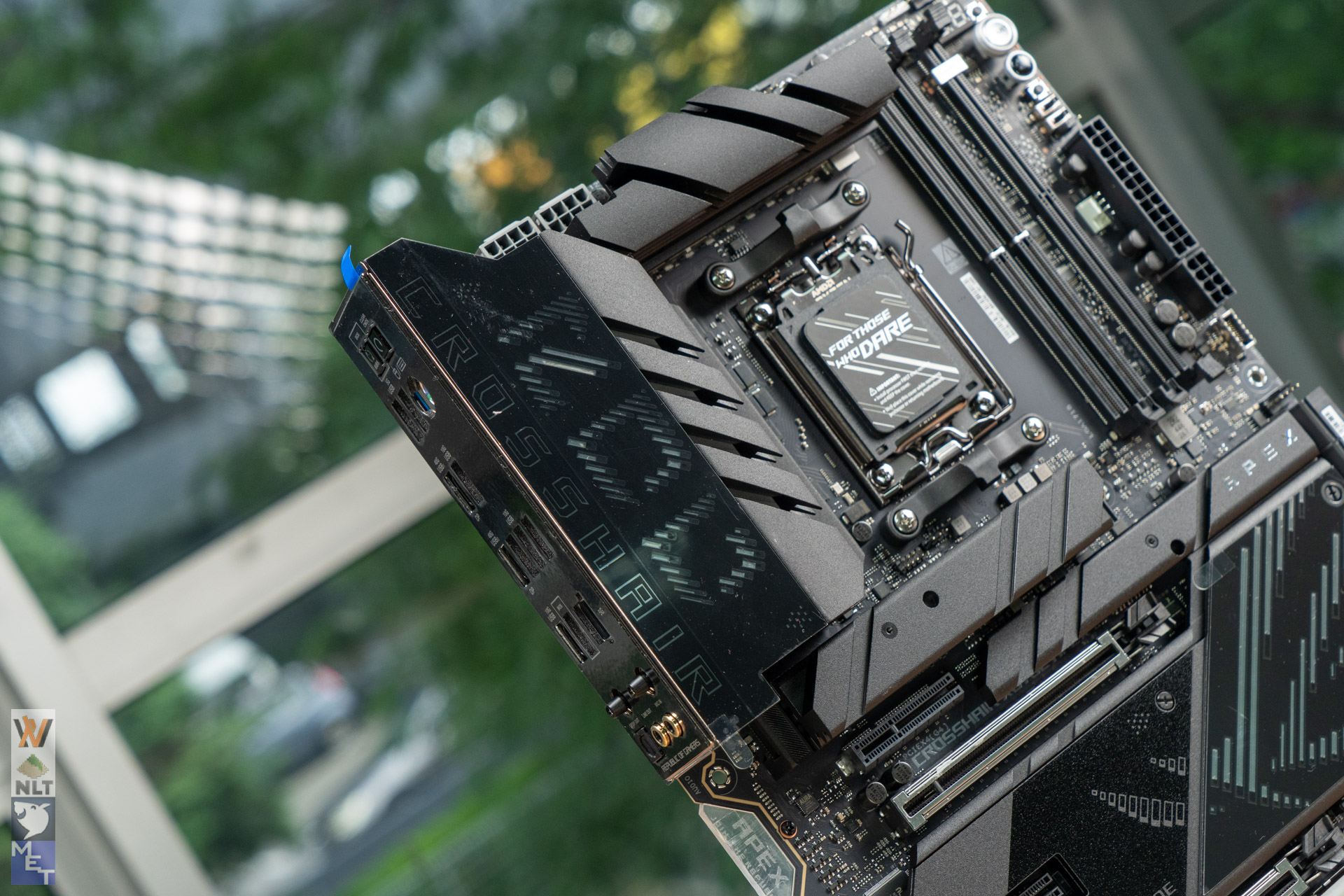
The ROG Crosshair X870E Apex is an impressive debut for the Apex series on the AMD platform. It delivers outstanding CPU support, unmatched memory overclocking potential, and all the quality-of-life features that enthusiasts have come to expect from ASUS’ Apex lineup. And the best part is that you’ll get a total of 4-year premium warranty upon registration at ASUS.
Thermal performance is also very reassuring, with VRM and chipset temperatures staying well within safe ranges even under stress testing. Combined with a robust power design and optimized memory overclocking design, you can confidently push both CPU and memory without concern.
Storage and connectivity features are equally strong, with plenty of PCIe Gen5 M.2 slots, USB4 ports, and high-speed networking that make it practical for power users.
While it is a premium board and will cost more than most X870E options, the Apex is not meant for everyone, unlike the X870E Hero. It is designed for those who want to push the limits of their hardware, whether that’s maximizing Ryzen 9 9950X performance or exploring the absolute peak of DDR5 memory speeds.
For overclockers and enthusiasts in Malaysia who have been waiting for a true Apex experience on AMD, the ROG Crosshair X870E Apex finally delivers on that promise.